Why Your Cat Chooses You (Even When Someone Else Feeds Them)
Your cat’s favorite person usually isn’t the “food human.” It’s the one who feels safest, calmest, and most predictable to be around.
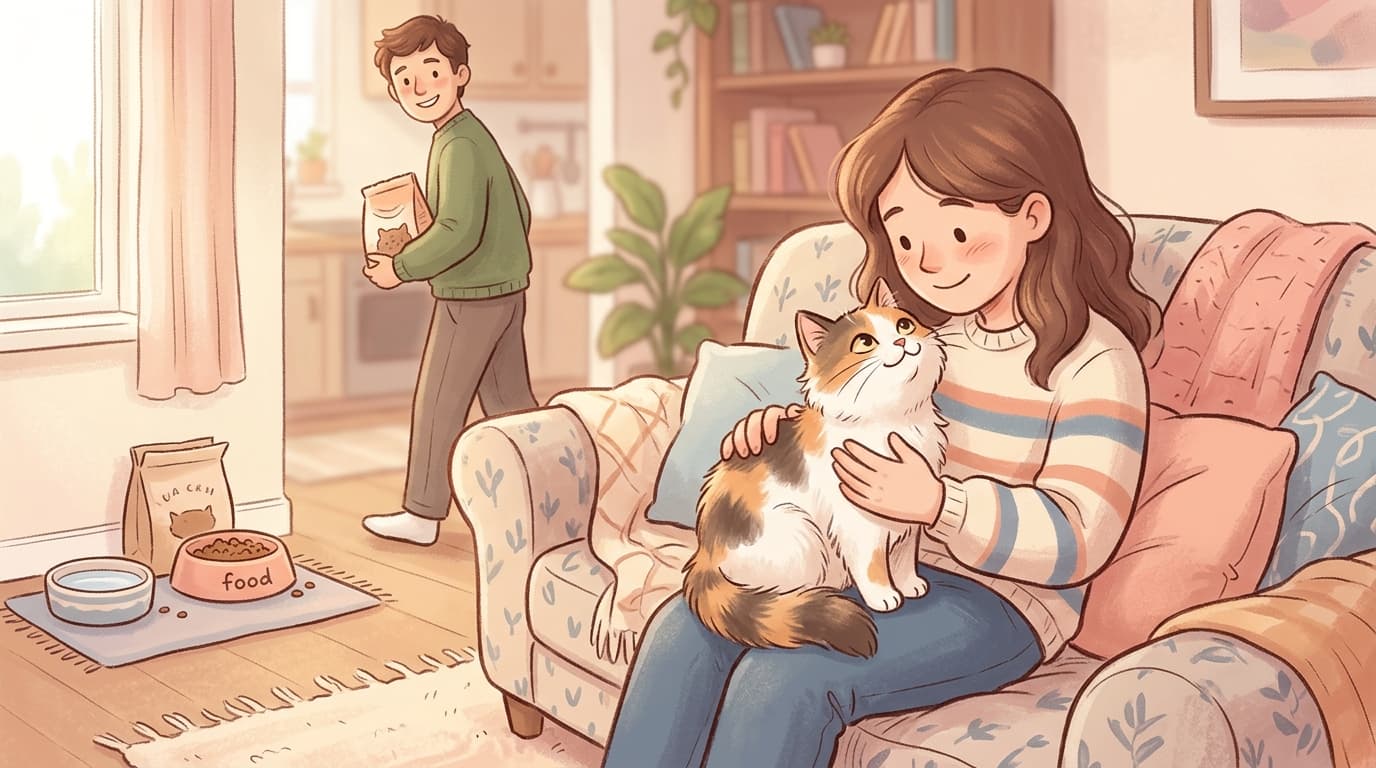
Your cat walks into the room, ignores every outstretched hand, and heads straight for you like it’s a done deal. It feels flattering (and a little mysterious), especially if you’re not even the one who refills the bowl.
That “favorite person” choice is rarely random. Most cat owners don’t realize your cat is responding to something much quieter than treats: the way you feel to be around.
Your cat isn’t picking the food person
We love to joke that we’re just the can-opener, but cats don’t build real attachment on a simple trade of “food in, cuddles out.” In multi-person homes, the cat’s top human is often the one who does less of the cat-related chores.
Why? Because your cat is evaluating safety and comfort first—and those don’t always come from the person holding the scoop.
Cats choose the human who feels predictable
Cats live in a world of tiny signals. They’re not only watching what you do; they’re reading how you do it.
If you’re the person who comes home, sits down, and lets the house settle—without immediately calling the cat over, grabbing, or demanding attention—you’re sending a powerful message: “Nothing scary is happening here.”
Predictability equals safety in a cat’s brain. The steadier your movements, voice, and general vibe, the easier it is for your cat to relax near you.
Giving space is (weirdly) the fastest way to be loved
If you’ve ever noticed that the guest who “doesn’t like cats” ends up with a cat on their lap, you’ve seen this rule in action.
People who keep their distance, avoid intense staring, and don’t constantly reach for the cat can feel extremely polite to a cat. To us it looks like disinterest. To a cat it reads as respect.
Meanwhile, the person trying hardest—leaning in, following the cat, insisting on petting—can create a low-grade, constant alarm feeling. Not because the cat hates them, but because it’s tiring.
Control matters more than affection (to a cat)
Cats are sweet… and they’re also tiny control enthusiasts.
Think about how much of your cat’s day is decided by humans: when food happens, when doors open, when lights change, when the vacuum roars to life. Choosing who to approach is one of the few decisions that’s fully theirs.
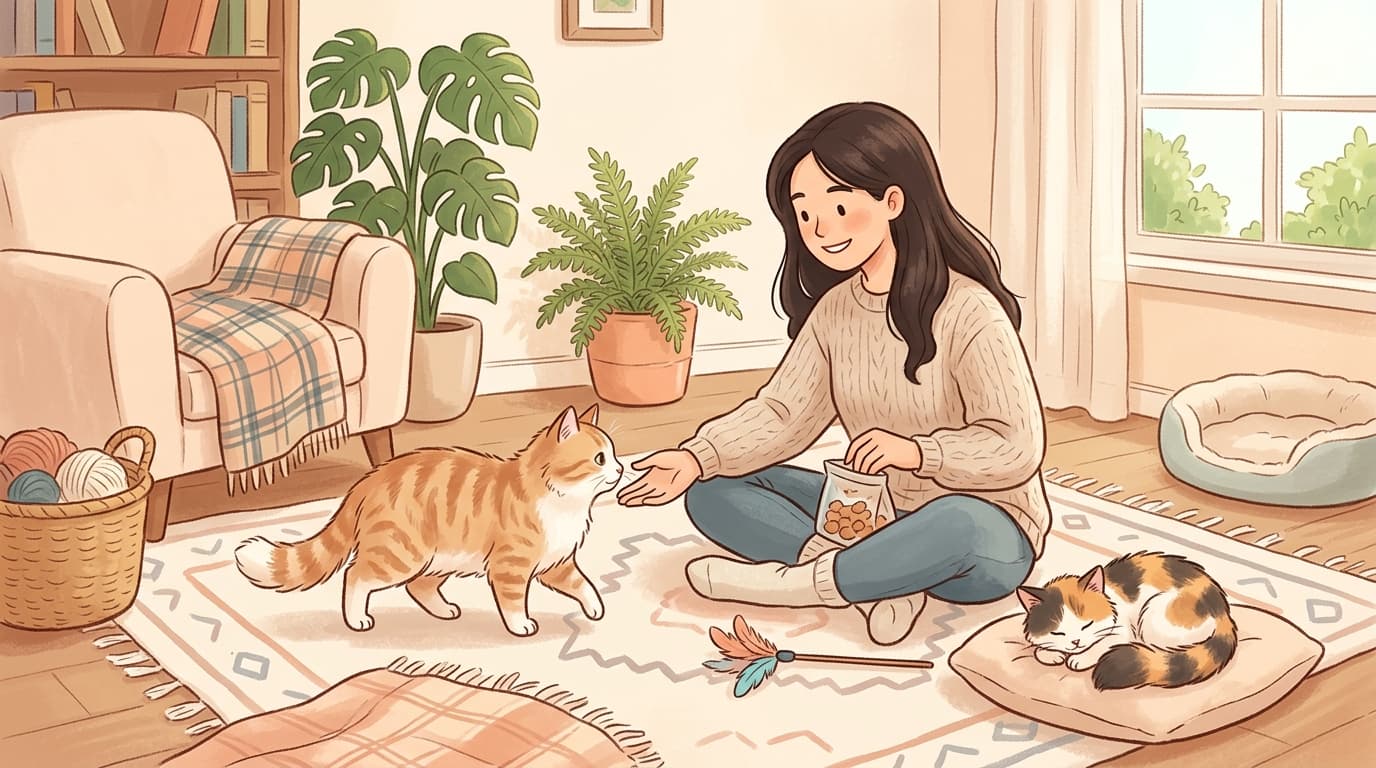
So if you let your cat come to you instead of going to them, you’re giving them autonomy. And if you wait—just a beat—before reaching out, allowing your cat to initiate with a head rub or body lean, you’re reinforcing something huge: they’re safe with you, and their boundaries will be honored.
That’s not just “being nice.” In cat terms, it’s trust-building at the highest level.
Your nervous system sets the tone
Cats are incredibly sensitive to emotional energy and physical cues: your footsteps, your pace, your breathing, even the sound of your voice.
If you tend to be the calmer presence in the home (or you genuinely unwind when you sit down with your cat), your cat will often gravitate to you because you’re the easiest place to settle. You become a kind of living “all clear” signal: if you’re relaxed, the territory is probably fine.
This doesn’t mean you can never be sad or stressed. It means your baseline feels stable enough that your cat can unclench.
Routine is your secret superpower
Humans can be inconsistent. One day we’re in a playful mood, the next day we’re busy and distracted.
Cats love consistency. The person who greets them the same way in the morning, sits in the same spot at night, and responds in a familiar, gentle pattern becomes a psychological anchor.
It’s not about spending the most time. It’s about being reliably “readable.” A predictable reaction—like a slow blink, a calm voice, or a brief, respectful touch—can be more comforting than an hour of overstimulating attention.
Scent: the invisible reason your cat keeps returning
We don’t think much about smell, but your cat absolutely does.
When your cat rubs against you, they’re not only being affectionate—they’re blending scent. In their world, that shared smell is a group signal: “We belong together.” Coming to you is often a way to refresh that shared identity.
So yes, sometimes your cat is on your laptop or draped across your clean clothes for a reason. They’re not necessarily trying to sabotage your day. They’re reinforcing “us.”
The tiny sign that you’re truly their number one
Purring is great. Kneading is adorable. But there’s a quieter signal that’s even more meaningful: your cat sits with their back to you.
If your cat comes over, settles down, and faces the room while turning their back toward you, they’re saying, “I trust you to watch my blind spot.” That kind of “back trust” is a serious honor in cat language.
Your cat choosing you isn’t about you trying harder—it’s about you feeling safer. Keep being steady, respectful, and calm, and you’ll stay the place your cat wants to land.
Continue reading

How Cats Decide Who to Trust (and How to Earn It Gently)
Cats don’t give trust by default. Learn the signals they watch—control, body language, routine, scent, and patience—to build a stronger bond.

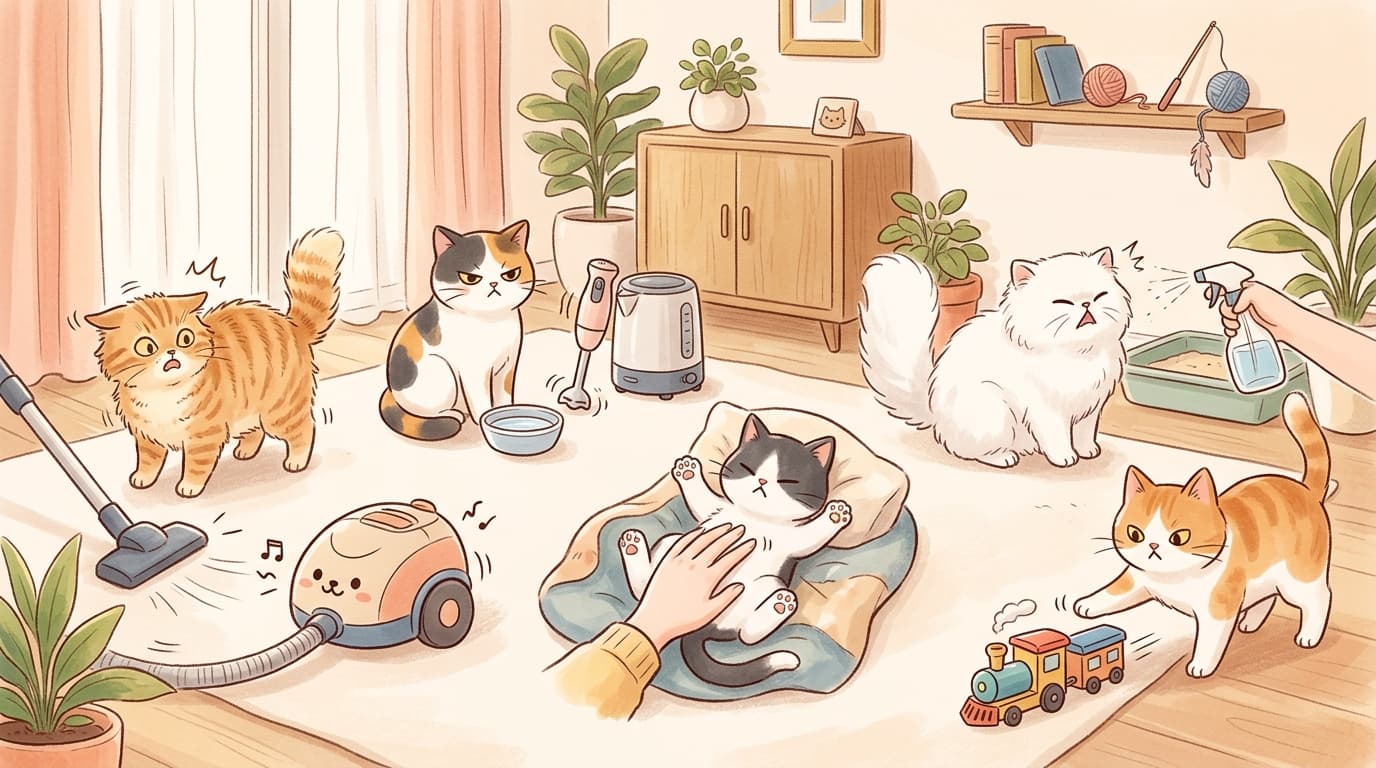
5 Everyday Things Your Cat Hates (and How to Stop Accidental Tantrums)
From the “wrong” petting spots to noisy rooms and sudden changes, these everyday habits can stress your cat and trigger swats.

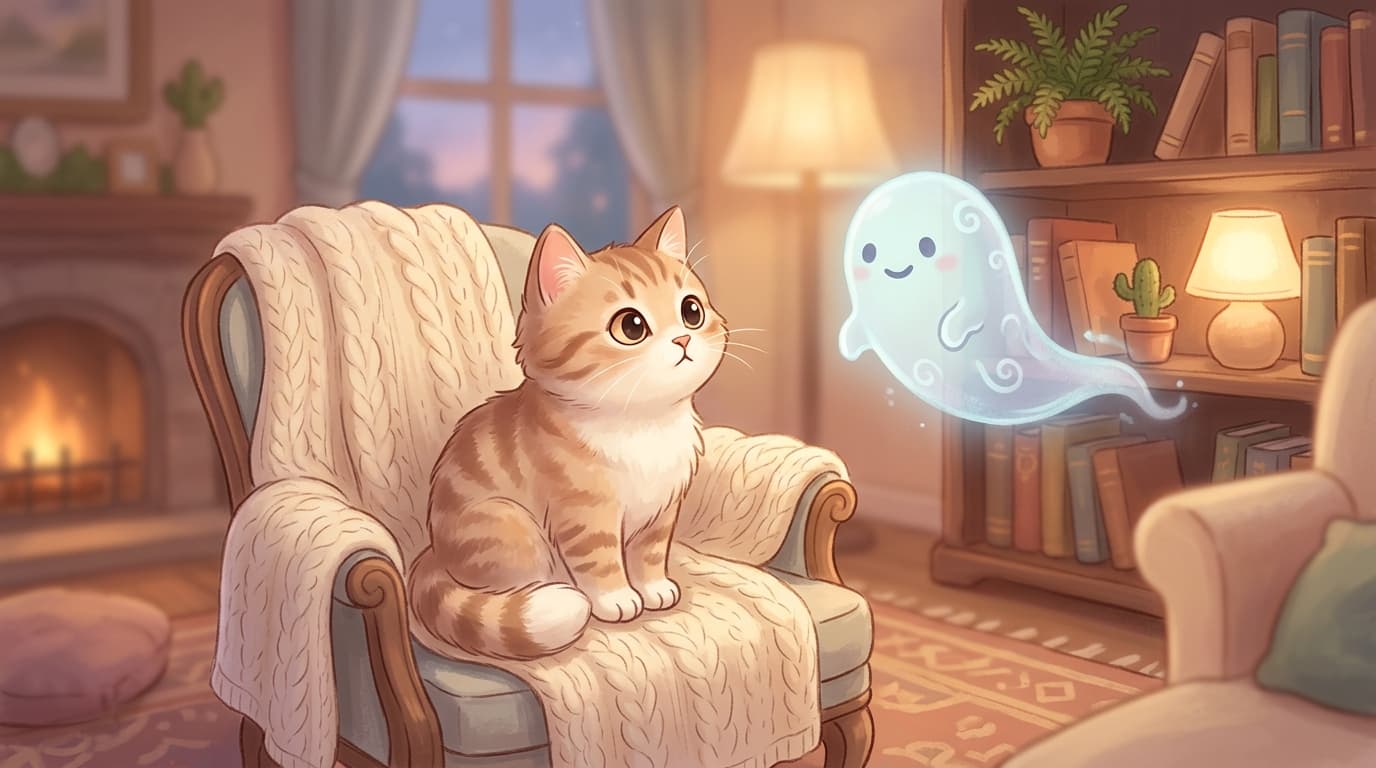
Do Cats See Ghosts? Why Your Cat Stares at “Nothing”
Cats may not see ghosts, but their night vision and super-hearing can make them react to things you can’t detect.