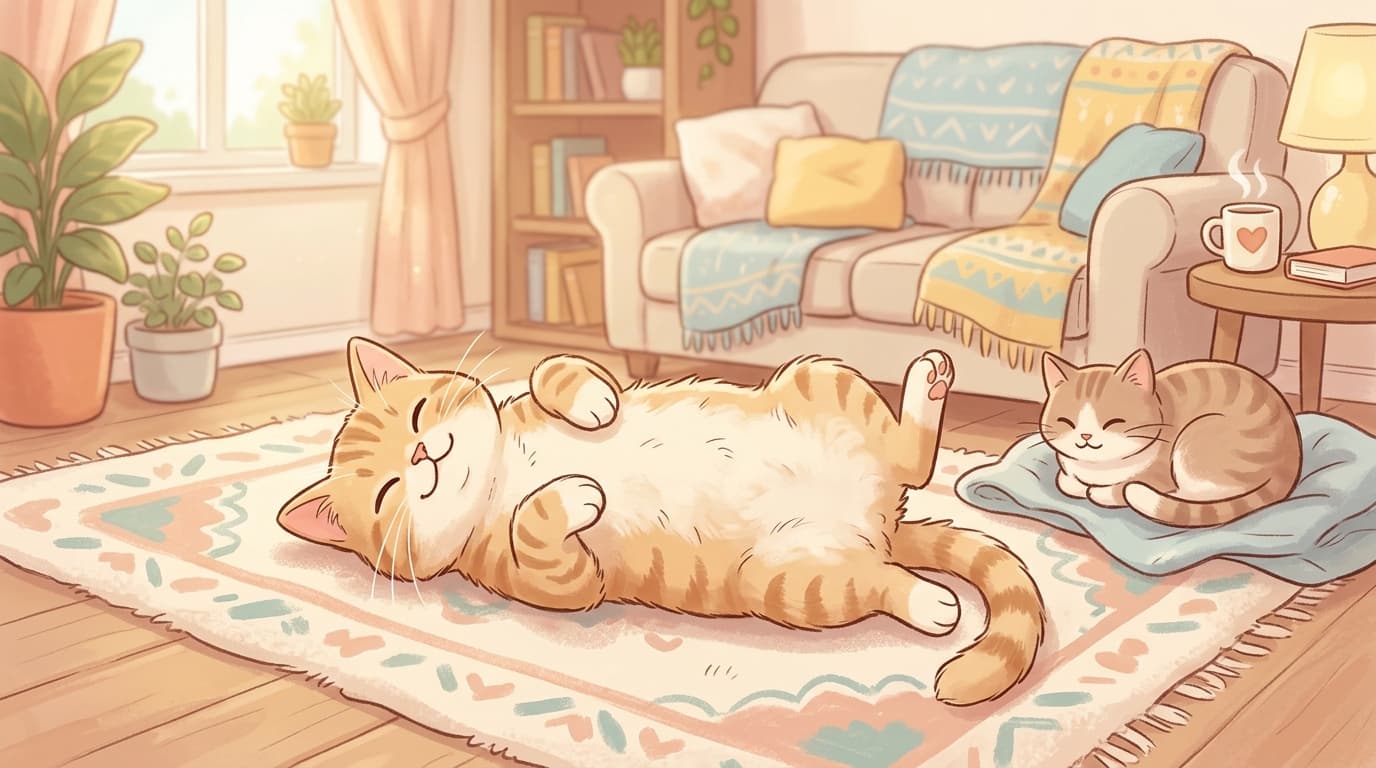
You walk into a room and your cat flops onto their back like a furry little starfish, belly fully exposed. Your hand reaches out automatically… and then you’re reminded, painfully, that cats don’t always agree with human instincts.
That belly-up pose is one of the most misunderstood pieces of cat body language—and it can mean very different things depending on what the rest of your cat is “saying.”
Cats didn’t evolve as pack animals that constantly negotiate with a group. They come from solitary hunters—independent, alert, and wired to protect themselves.
Because of that, cats lean heavily on body language instead of constant vocalizing. Ears, tail, eyes, whiskers, muscle tension… it’s all part of the conversation. And the belly display? That’s a whole paragraph, not a single word.
When your cat rolls over in front of you, there are three common explanations. The trick is learning which one you’re seeing in the moment.
Your cat’s belly is their most vulnerable area. It’s not the well-armored part of the body like the back and shoulders. In the wild, an injury to the underside can be catastrophic—your cat’s instincts know that, even if your living room is the safest “territory” on earth.
So when your cat voluntarily exposes their belly near you, it can be a genuine signal of safety and trust. If you’ve ever noticed your cat doing this in a quiet, peaceful moment, that’s often what’s happening: they’re letting their guard down because they feel secure with you.
Look for a whole-body “softness,” not just the pose:
- Loose, floppy posture (no stiffness in the legs or torso)
- Half-closed eyes or slow blinking (the classic calm signal many people call a “cat kiss”)
- Ears in a neutral position (not pinned back, not sharply forward)
A simple way to respond: try slow blinking back from where you stand. Many cats will return it, and it’s one of the gentlest ways to say, “I’m safe, too.”
This is where most scratches happen.
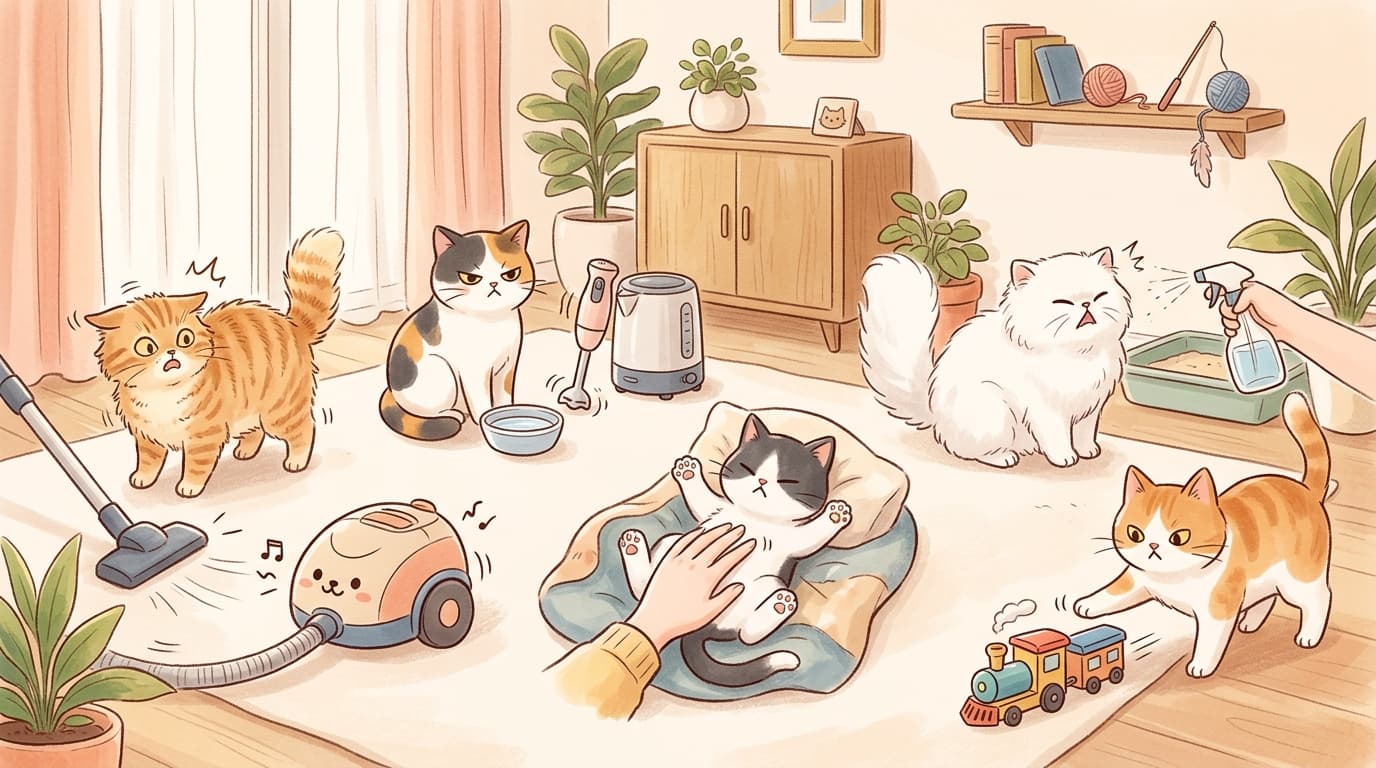
A cat on their back isn’t automatically “submitting” the way a dog might. For a stressed or frightened cat, rolling onto the back can be a tactical choice: they no longer need to balance on all fours, and they can use every weapon at once—teeth, front claws, and especially the powerful back legs.
Those rapid back-leg kicks (sometimes called “bunny kicks”) can do real damage. If your cat is belly-up and suddenly grabs your hand, it may not be a betrayal. It may be your cat saying, very clearly, “Do not come closer.”
Check the “red flag” signals:
- Very large, dilated pupils
- Tail thumping or lashing against the floor
- Ears flattened back against the head
- Tense body that looks coiled rather than relaxed
If you see these, the best move is space. Don’t crowd your cat or insist on contact. Let them settle on their own timeline.
Sometimes the belly display isn’t emotional—it’s practical.
A cat’s belly often has thinner fur than other areas, which makes it useful for releasing heat. On hot days, many cats seek out cool surfaces like tile, hardwood, or shaded spots and sprawl belly-up to maximize contact with that cooler floor.
In this case, your cat isn’t “asking” anything from you. They’re regulating their body temperature in the smartest way they know.
If your cat is stretched out on the kitchen floor during a warm afternoon, the kindest response may be simply keeping the area comfortable and letting them enjoy their chill spot undisturbed.
Most pet owners don’t realize this subtle point: a cat can trust you deeply and still not want their belly touched.
Think of it like a close friend. You can feel completely safe with someone without wanting them to cross physical boundaries whenever they feel like it.
For many cats, the belly remains a sensitive “no-go zone” even during relaxed moments. When you go straight for the belly rub without a clear invitation, your cat may react fast—claws, teeth, the whole package. And beyond the sting on your hand, it can chip away at the trust your cat was offering.
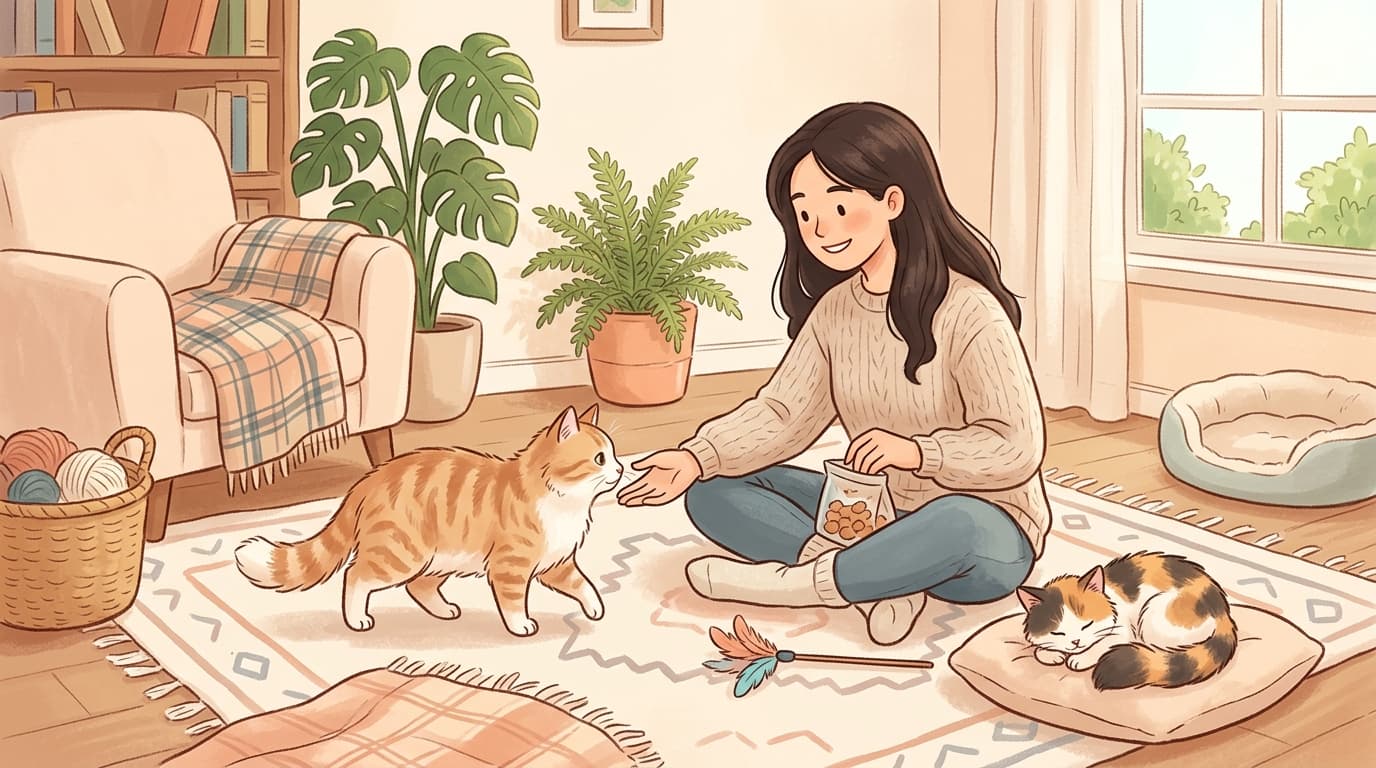
If you want to try for more affection without triggering defense mode:
- Start with safer areas: head, cheeks, chin
- Watch your cat’s reaction closely
- Only continue if your cat actively leans into your hand or clearly seeks more contact
Over time, respecting boundaries tends to make cats more affectionate, not less. They learn you’re predictable and safe—and that’s the relationship cats choose, day after day.
The next time your cat rolls over, pause for a second before your hand moves. Look at the eyes, the ears, the tail, and the tension in the body.
That one adorable pose could be trust, a warning, or simply a hot cat enjoying a cool floor. When you learn to tell the difference, you stop getting scratched—and you start understanding your cat in a much deeper way.