Why Your Cat Wants to Sleep in Your Bed (and Why It’s Usually a Good Sign)
Sleeping beside you isn’t “clingy” behavior—it's trust, routine, and real comfort for your cat (and often for you, too).
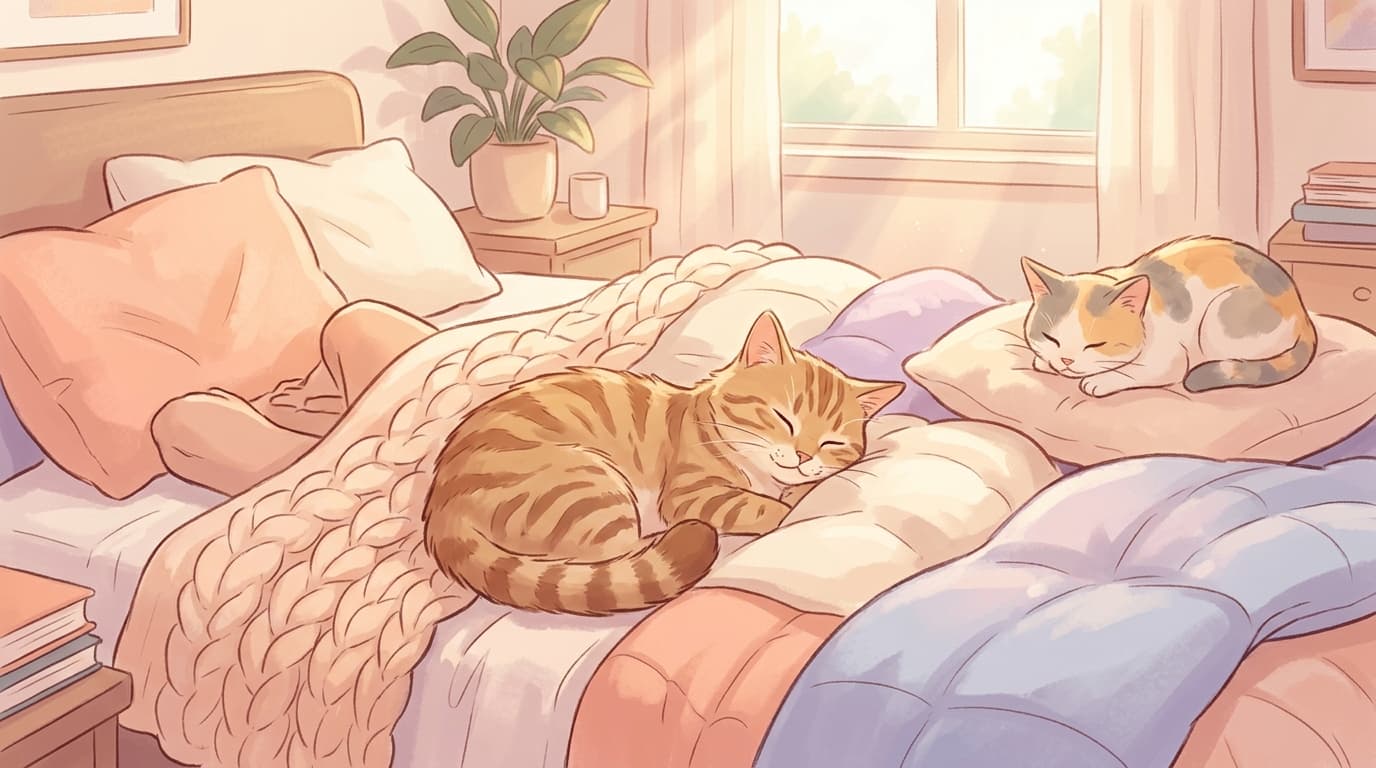
You turn off the light, get comfortable, and suddenly there’s a quiet little hop onto the mattress. A few circles, a soft collapse near your side—and you’re left wondering whether you should allow it or stop it. Most pet owners don’t realize that sharing sleep space isn’t just a cute habit for many cats; it’s one of the clearest trust signals they can give.
Cats aren’t as “independent” as we’ve been told
Cats get labeled as loners, and sure, they like doing things on their own terms. But that doesn’t mean they don’t need connection. In natural settings, cats often form loose but steady social groups, complete with preferred companions and shared resting areas.
In your home, you’re not just the food provider—you’re part of your cat’s social world. If your cat chooses to sleep in your bed, it’s often less about stealing the warm spot and more about choosing their group.
Sleeping in your bed is a daily vote of confidence
Sleep is the most vulnerable state your cat enters all day. Their senses aren’t on high alert, their reactions are slower, and they can’t instantly spring into action the way they can when they’re awake.
That’s why the sleeping location matters so much. Cats don’t pick a sleep spot casually. If your cat consistently sleeps in your bed, near your body, they’re essentially saying: “This is where I feel safest.”
If you’ve ever noticed your cat settling in close to your breathing, or tucking against your side like they’re trying to match your rhythm, you’re seeing that safety choice in action.
The quiet power of sleeping close: calm, connection, and routine
Sharing sleep space can create a real sense of synchronization. Over time, regular close contact at rest can nudge bodies into a calmer pattern—slower breathing, less tension, and that cozy “we’re okay” feeling that’s hard to describe but easy to recognize.
On an emotional level, closeness at night supports bonding. Many people notice their cats become more relaxed, more approachable, and more openly affectionate when they’re consistently included in the nighttime routine. It’s not magic. It’s repetition: hundreds of nights reinforcing one simple message—this is a safe place.
What happens when a cat is used to you… and suddenly shut out
Some cats adapt fine to sleeping separately. But for a cat that’s gotten used to sleeping near you, being excluded behind a closed door can trigger a low-level, ongoing uneasiness.
It doesn’t always look dramatic. You might get a few minutes of scratching, a little meowing, then silence. But “quiet” doesn’t always mean “fine.” For some cats, separation at night can keep their nervous system slightly on guard—more watchful, less settled, less emotionally open over time.
The bedtime routine matters more than you think
It’s not only the sleeping—it’s the lead-up.
Cats are incredible pattern watchers. They notice the dimming lights, the bathroom trip, the teeth brushing, the pillow-fluffing. Plenty of cats will wait nearby and only fully settle once you’re in bed.
That’s not coincidence. It’s your cat syncing to your rhythm, and bedtime is the peak of that daily predictability. And predictability, to a cat, is basically another word for security.
“But my cat keeps me awake”—how to make bed-sharing work
The objections are real: a cat on your legs, a midnight face-step, constant jumping on and off the bed. But sometimes nighttime restlessness isn’t just “cats are nocturnal.” It can be a sign your cat hasn’t fully figured out where they belong at night.
A consistent routine and a clear welcome often lead to deeper, calmer sleep—for your cat and for you.
If sharing the bed truly doesn’t work (because you’re a light sleeper, you have allergies, or you just can’t rest), you don’t have to jump straight to total separation. Try one of these middle-ground options:
- A dedicated cat bed or blanket right next to your pillow area (so they have a “spot”)
- A cozy sleep corner beside your bed
- A slightly open door so your cat can check in and settle
For many cats, simply being near your scent and your presence is enough.
The tiny moment that shows your cat fully trusts you
There’s a small, almost invisible behavior that says a lot: your cat’s eyes get heavy, their body softens, and then their head slowly sinks onto you—like they’re finally letting go.
That’s not just comfort. That’s your cat stopping their internal night watch because they believe you’ve got it covered.
Letting your cat sleep in your bed often isn’t about spoiling them. It’s about belonging. And if you’ve ever felt that special calm when the room goes dark and your cat quietly comes to you, it’s because something real is happening in that moment.
Continue reading

How Cats Decide Who to Trust (and How to Earn It Gently)
Cats don’t give trust by default. Learn the signals they watch—control, body language, routine, scent, and patience—to build a stronger bond.

5 Everyday Things Your Cat Hates (and How to Stop Accidental Tantrums)
From the “wrong” petting spots to noisy rooms and sudden changes, these everyday habits can stress your cat and trigger swats.

Do Cats See Ghosts? Why Your Cat Stares at “Nothing”
Cats may not see ghosts, but their night vision and super-hearing can make them react to things you can’t detect.