10 Simple Foods That Fill the Gaps in Your Cat’s Diet (and How to Get Picky Cats to Eat Them)
Boost your cat’s coat, digestion, appetite, and joints with 10 easy add-ins—plus tricks for picky eaters and safe serving tips.
If your cat eats kibble every day, they may be missing some of the “whole prey” extras their body is built to use—things like natural taurine, gentle fiber, and certain heat-sensitive nutrients. The good news is you don’t need fancy supplements to bridge that gap. You can use a few simple foods (most from your kitchen) to support coat shine, digestion, appetite, and even stiff joints.
Below are 10 cat-friendly add-ons, grouped into three easy categories, with practical serving ideas and a picky-cat trick for the ones who act offended by anything new.
Why processed cat food can leave little gaps
In the wild, a cat doesn’t just eat muscle meat. They also get tiny amounts of plant matter and enzymes from the stomach contents of prey, plus naturally occurring nutrients that can be reduced during high-heat processing.
That doesn’t mean kibble is “bad”—it means you can often improve how your cat looks and feels by adding back a few targeted, cat-safe extras in small amounts.
Group 1: Protein “power foods” that support your cat from the inside
These focus on the kind of animal-based nutrition cats are designed to run on.
1) Chicken hearts (a natural taurine boost)
Chicken hearts are naturally rich in taurine, plus iron and B vitamins. Taurine matters a lot for cats—especially for heart and eye health.
Picky-cat trick: Lightly cook the hearts for about 2 minutes so they’re just barely done (not raw, not fully overcooked). Chop into tiny pieces (rice-grain size or smaller) and serve warm so the smell is stronger.
2) Chicken thigh meat (better than breast for most cats)
Humans love chicken breast because it’s lean. Cats, on the other hand, rely heavily on animal fat for energy. Dark thigh meat generally provides more fat and tends to be a better fit than very lean breast.
How to serve it: Boil the thigh in plain water—no salt, no onion, no garlic, no seasonings. Shred it with a fork.
Bonus tip: Save the cooking water. Once it’s warm (not hot), drizzle a little over your cat’s regular food like a simple broth topper.
3) Chicken liver (tiny amounts only)
Liver is like nature’s multivitamin: vitamin A, B vitamins, iron, and copper. But it’s also the one you don’t want to overdo because vitamin A can build up in the body over time.
Rule of thumb: Think of liver like a “micro-dose.” A piece about the size of your thumbnail every 10–14 days is plenty.
Picky-cat trick: Dehydrate liver at the lowest oven temperature until it becomes dry and crunchy. Then it feels like a treat, not “healthy food.”
Group 2: “Supplements disguised as food” (easy wins)
These are simple add-ons that can make a noticeable difference without turning mealtime into a project.
4) Canned sardines (in water, no salt)
Sardines are small fish, so they’re less likely to accumulate heavy metals the way larger fish can. They’re also naturally rich in omega-3s for skin, coat, joints, and heart support. The soft bones provide calcium.
How to serve: Choose sardines canned in water only—no oil, no sauces, no added salt. Rinse them well, then mash one sardine per week into your cat’s food.
5) Cooked egg yolk (hairball helper)
Raw egg white isn’t a great idea for cats because it can interfere with biotin (vitamin B7) absorption. Cooked egg yolk, though, can be a helpful add-on.
The yolk contains lecithin, which can help emulsify fats in the digestive system—many owners notice this can make hairballs less of a weekly event.
How to serve: Hard-boil an egg, take the yolk, let it dry a bit, then crumble a small amount over food.
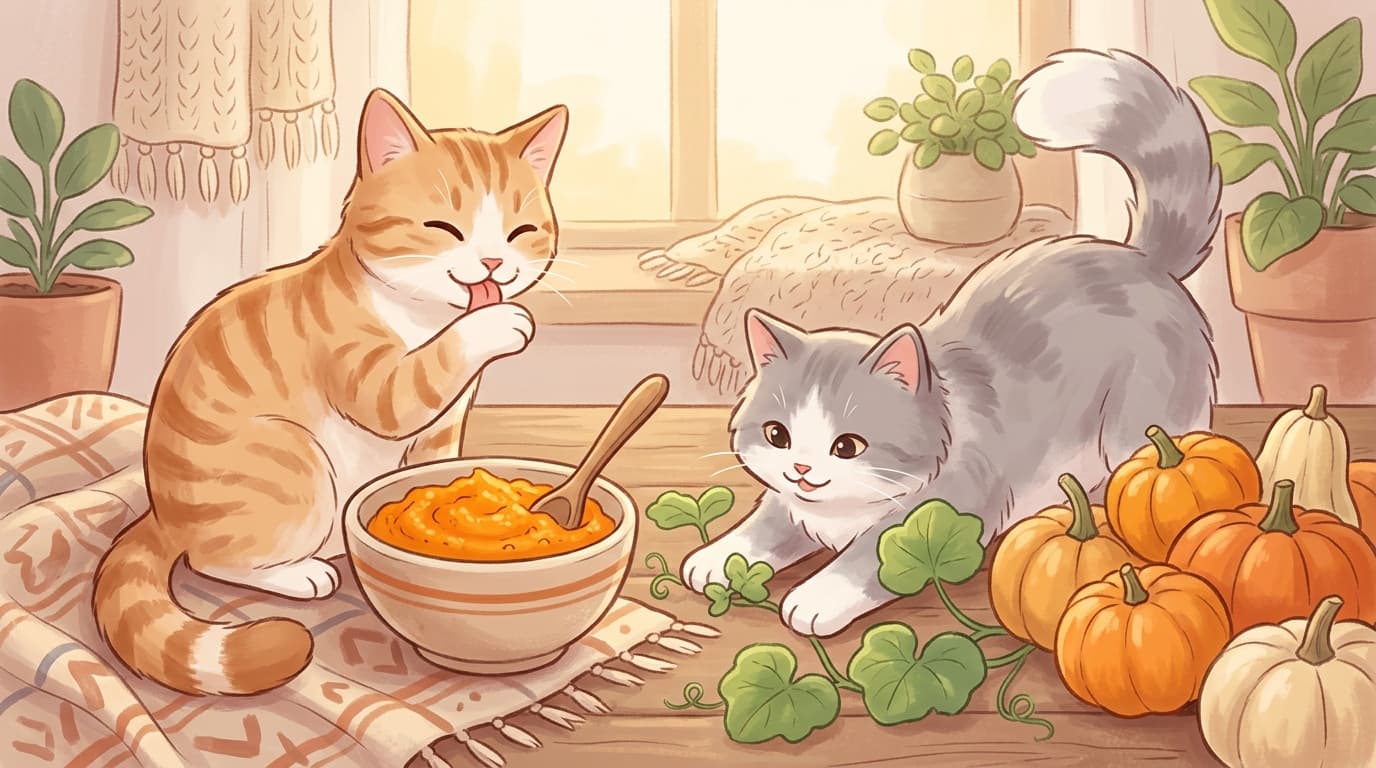
6) Plain pumpkin purée (for digestion swings)
Cats don’t eat pumpkins in the wild, but they do get a little fiber from prey. Plain pumpkin purée mimics that gentle fiber.
The soluble fiber can help in both directions: it can firm up loose stools and also help constipation by managing water in the gut.
How to serve: Use 100% pumpkin purée (not pumpkin pie mix—those added sugars and spices aren’t cat-friendly). Freeze into ice cube trays so you can thaw one small cube when needed.
Group 3: Smart add-ins that can change appetite, weight, and aging
These are the “fine-tuners”—small, strategic extras based on what you’re seeing at home.
7) Green beans (for overweight cats who act starving)
If you’ve ever had a cat who meows like they haven’t eaten in days—right after breakfast—this one’s for you. Green beans add volume and fiber with very few calories.
How to serve: Thaw frozen green beans, chop into kibble-sized pieces, and mix 3–4 pieces into a meal.
8) Blueberries (a tiny antioxidant boost)
Blueberries contain antioxidants, and research in animals suggests certain compounds may support brain health as pets age.
How to serve: Most cats won’t eat a whole berry. Mash one small blueberry into wet food so it disappears.
9) Bone broth (for hydration + stiff joints)
Long-simmered bone broth can release collagen and other compounds (including glucosamine and glycine) into the liquid. Many owners like it for older cats who seem creaky, and it’s also an easy hydration boost—especially for cats who don’t drink much.
How to make it: Simmer chicken or beef bones in water for a long cook (slow cooker works well). Add a small splash of apple cider vinegar. Keep it plain: no onion, no garlic, no salt, no spices.
How to serve: Freeze into cubes. Offer a cube as a summer “broth pop,” or warm slightly and pour a little over food in cooler months.
10) Nutritional yeast (the picky-eater cheat code)
Nutritional yeast isn’t baking yeast. It has a savory, cheesy-nutty smell that many cats find irresistible, and it’s naturally rich in B vitamins, including thiamine—often linked with appetite support.
How to use it: Sprinkle a small pinch on top of any new food you’re trying to introduce. If your cat turns their nose up at everything, this is often the easiest place to start.
How to choose the right food based on what your cat is doing
If you’re not sure where to begin, match the add-on to the problem you actually see:
- Dull coat or dandruff: Start with sardines once a week and watch for changes over about 6 weeks.
- Frequent hairballs: Try crumbled hard-boiled egg yolk a couple times per week.
- Extremely picky appetite: Start with a pinch of nutritional yeast to make food more appealing.
- Always hungry + overweight: Add a few pieces of green beans for volume.
- Stiff, older-cat movement: Make bone broth your first experiment.
The safest way to add these foods (without overwhelming your cat)
Don’t introduce all 10 at once. Pick one add-on, use it consistently for about two weeks, and jot down what you notice—coat, stool quality, energy, appetite, and overall enthusiasm at meals.
A teaspoon-level change can be enough to shift what you see at home within a month or two.
A simple takeaway
You can’t control everything about your cat’s health, but you can absolutely control what shows up in their bowl. Start with one small, smart add-in that matches your cat’s biggest issue, and give it time—your cat’s coat, comfort, and appetite often tell the story before anything else does.
Continue reading

Pumpkin for Cats: The Simple Food Add-In That Supports Digestion and Helps Push Out Worms
Plain pumpkin puree can support your cat’s digestion and make the gut less welcoming for worms—plus most cats accept it well.

15 Human Foods Cats Can Safely Enjoy (And Why They’re So Drawn to Your Plate)
Your cat isn’t being picky—instinct drives their food choices. Here are 15 cat-friendly human foods and how to offer them safely.

Why Your Cat Refuses Wet Food (And How to Fix It Without a Mealtime Battle)
Your cat isn’t being picky—wet food can feel unsafe. Learn the real reasons and a simple, stress-free plan to switch successfully.