5 Facial Signs Your Cat Is in Pain (And What They Usually Mean)
Cats hide pain well. Learn 5 facial cues—squinty eyes, pinned ears, tense muzzle, stiff whiskers, and a lowered head—plus common causes.
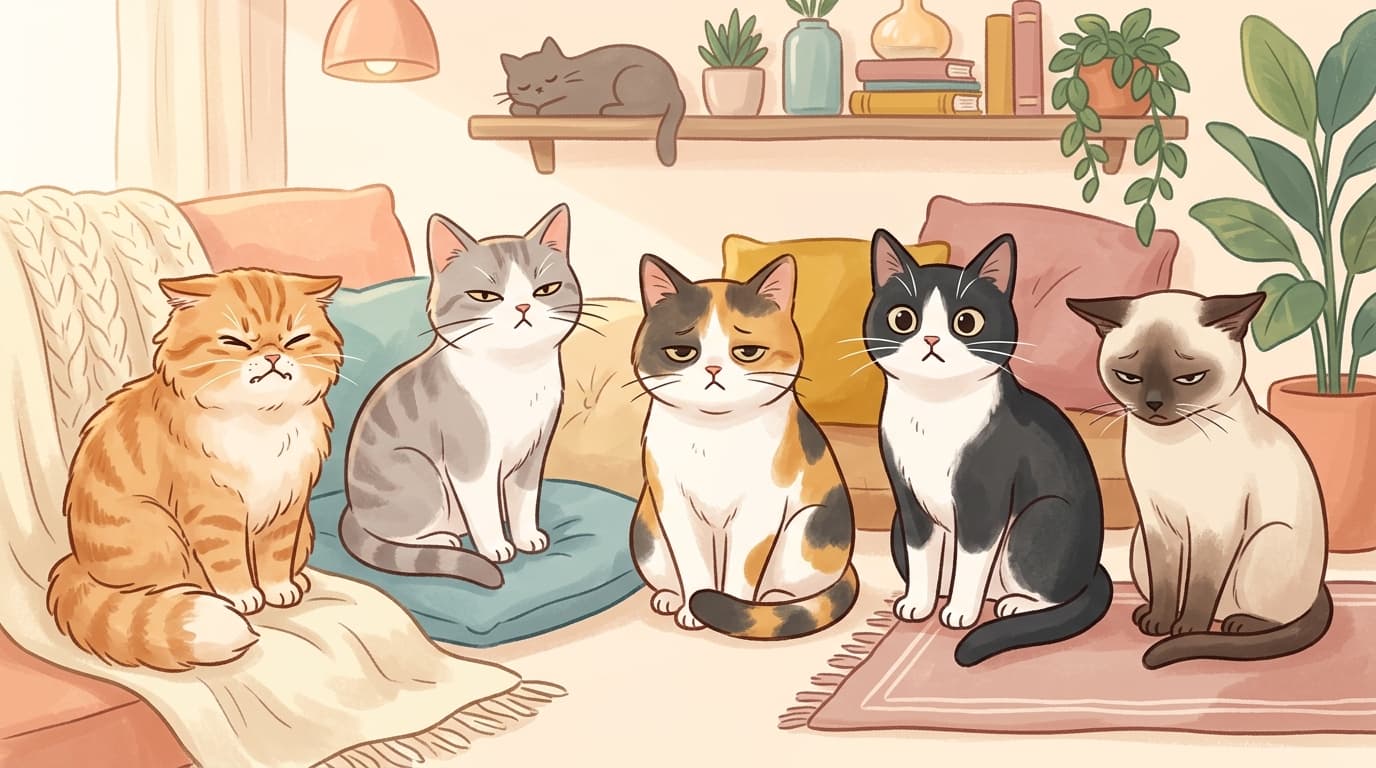
Cats can be unbelievably good at acting “fine,” even when they’re not. But if you look closely, your cat’s face often gives away what their body is trying to hide.
Below are five facial signs your cat is in pain, plus the extra clues that help you tell “normal cat mood” from “something’s wrong.”
1) Half-closed, tense eyes (not sleepy eyes)
A relaxed cat may blink slowly or nap with heavy eyelids. A cat in pain often looks different: the eyes stay partially closed for long stretches, and the gaze can look tight, fixed, or unusually intense.
If you’ve ever noticed your cat sitting still with a squinty, strained expression even though the room isn’t bright and they don’t look drowsy, that’s worth paying attention to.
2) Ears turned sideways or pinned back
Ears that are low, rotated outward, or pulled back can be a big hint that your cat is uncomfortable. The key is consistency: if the ears stay in that position and your cat seems less responsive to sounds (or to you calling them), pain could be part of the picture.
Some cats do this when they’re scared or overstimulated too—so look for other signs on this list to connect the dots.
3) A tight muzzle and “serious” expression
Most cats have a soft, neutral look when they’re comfortable. With pain, the face can lose that relaxed vibe. The muzzle area may appear tense, and the overall expression can seem stern or strained—like your cat is bracing.
This is one of those changes that’s easiest to spot if you know your cat’s “normal face.” Many pet owners don’t realize how much a cat’s expression shifts until they compare it to old photos.
4) Whiskers pushed forward and stiff
Whiskers aren’t just cute—they’re part of your cat’s sensory toolkit. When a cat is in pain, whiskers may look rigid and angled forward rather than loose and gently fanned to the sides.
Stiff, forward whiskers can also show up during hunting play or excitement, so again, context matters. A tense face plus low activity is a very different story than a focused face during playtime.
5) Head held lower than usual (or reluctance to turn it)
A cat that keeps their head down more than normal, or avoids turning their head to respond to movement or noises, may be protecting something that hurts. This can pair with a general “shut down” vibe—less curiosity, less movement, less engagement.
The “plus signs” that often show up with facial pain cues
Facial signs are powerful, but they’re even more meaningful when you notice behavior changes at the same time, such as:
- Less interaction with you (more distant or unusually quiet)
- Reduced grooming or a messier coat
- A hunched posture
- Irritability or sudden aggression
- Hiding more than usual
- Eating less
If you’re seeing several of these along with the facial signs above, it’s a strong hint your cat may be hurting.
Common reasons cats show pain on their face
Pain can come from many places, and cats don’t always make it obvious where it hurts. A few common culprits include:
Arthritis in older cats
Arthritis is especially common in senior cats. It involves wear and tear in the joints, which can make movement painful and stiff. One of the most recognizable changes is that your cat stops jumping up to favorite spots—like the couch—or hesitates before climbing.
Dental disease (often missed)
Mouth pain can be intense and surprisingly easy to overlook. Problems like gum inflammation (gingivitis) or tooth resorption can cause ongoing discomfort that doesn’t always come with dramatic symptoms. Sometimes the first “clue” is simply a different expression, less grooming, or eating changes.
Internal issues (kidneys, liver, urinary tract)
Discomfort from internal illness can also show up as a more guarded face, reduced activity, hiding, or appetite changes. Cats are masters at masking these problems until they’re feeling pretty lousy.
What to do if you notice facial signs your cat is in pain
Start by thinking in patterns, not single moments. One squinty afternoon may mean nothing; a few days of tense eyes, pinned ears, and a lowered head is another story. Make a quick note of what you’re seeing (and when), and arrange a veterinary visit—especially if your cat is eating less, hiding, or acting unlike themselves.
Your cat doesn’t need to cry or limp to be in pain. Sometimes all they can manage is a small change in their face—and you noticing it can make all the difference.
Continue reading

How Cats Decide Who to Trust (and How to Earn It Gently)
Cats don’t give trust by default. Learn the signals they watch—control, body language, routine, scent, and patience—to build a stronger bond.

5 Everyday Things Your Cat Hates (and How to Stop Accidental Tantrums)
From the “wrong” petting spots to noisy rooms and sudden changes, these everyday habits can stress your cat and trigger swats.

Do Cats See Ghosts? Why Your Cat Stares at “Nothing”
Cats may not see ghosts, but their night vision and super-hearing can make them react to things you can’t detect.