Why Cats Eat Plastic (and How to Stop the Chewing Habit)
Cats chew plastic due to boredom, stress, curiosity, or food smells—and it can be dangerous. Learn causes and practical ways to stop it.
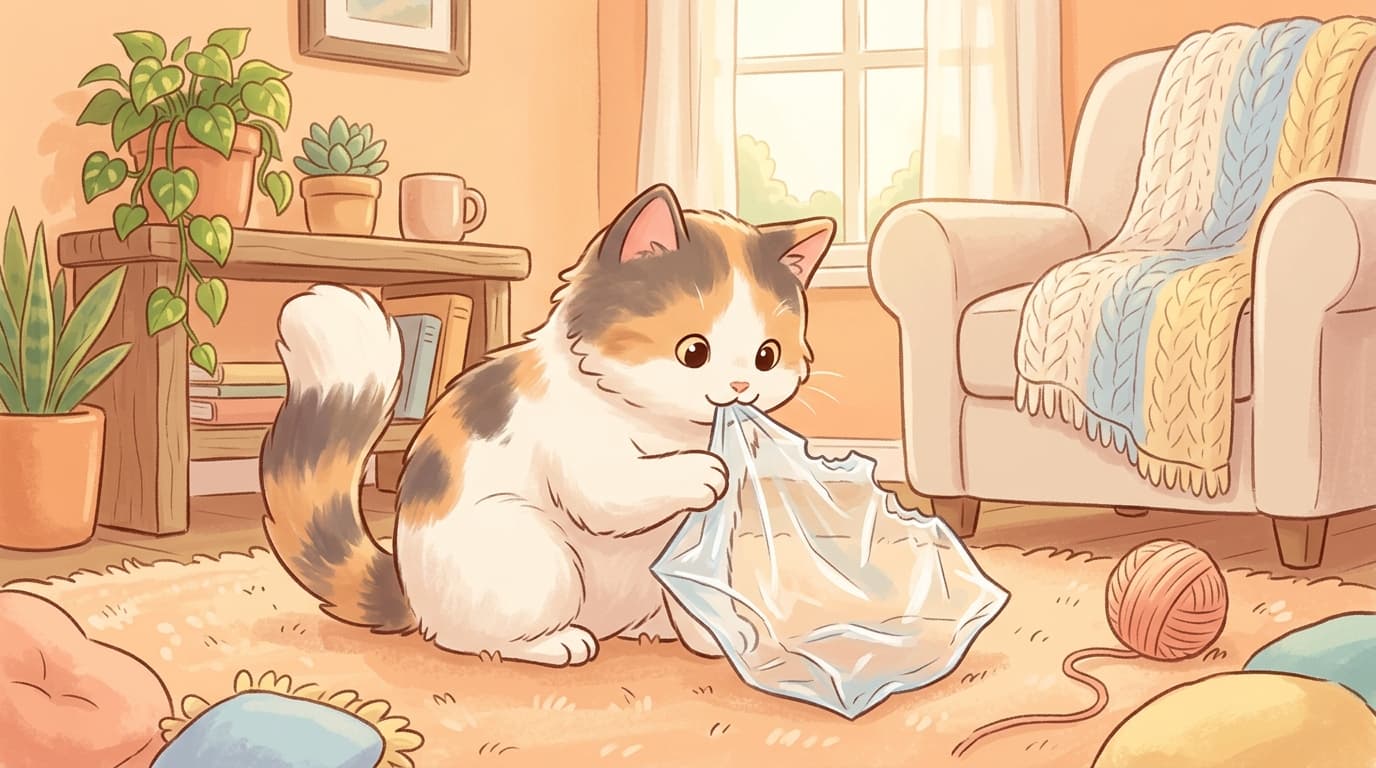
You turn your back for one minute and your cat is gnawing on a grocery bag handle or trying to bite through a charger cable. It looks weirdly casual—until you realize cats eating plastic can turn dangerous fast.
Why cats eat plastic in the first place
Cats don’t usually chew plastic because they’re being “bad.” Most of the time, it’s a mix of instinct, environment, and simple opportunity.
Curiosity (especially in young cats)
Kittens and younger cats explore the world with their mouths. Crinkly wrappers, dangling bag handles, and soft plastic edges are basically a DIY toy. If you’ve ever noticed your cat pouncing on a wrapper like it’s prey, that curiosity can easily turn into chewing.
Boredom and not enough stimulation
A cat who doesn’t have enough to do will invent a hobby—and plastic is everywhere. Chewing can become a self-entertaining habit, especially for indoor cats who aren’t getting enough playtime, climbing opportunities, or puzzle-style enrichment.
Stress or anxiety after changes at home
Cats are routine lovers. A move, new roommate, new baby, different work schedule, renovations, or even rearranged furniture can make some cats anxious. Chewing (and licking) can work like a self-soothing behavior, similar to how some people bite their nails.
Digestive issues (including parasites or illness)
Sometimes chewing odd things is your cat’s way of signaling that something feels off internally. Digestive discomfort or other health problems can trigger unusual oral behaviors, including chewing non-food items.
The smell of food on plastic
Most pet owners don’t realize how attractive plastic can be purely because of scent. Bags and wrappers that touched meat, cheese, oils, or other strong-smelling foods can be irresistible. Your cat may be “snacking” on the smell rather than the plastic itself.