What Do Dogs Dream About? REM Sleep, Twitchy Paws, and the Memories They Replay
Dogs really do dream—often about their day. Learn what REM sleep looks like, why paws twitch, and why you shouldn’t wake them up.
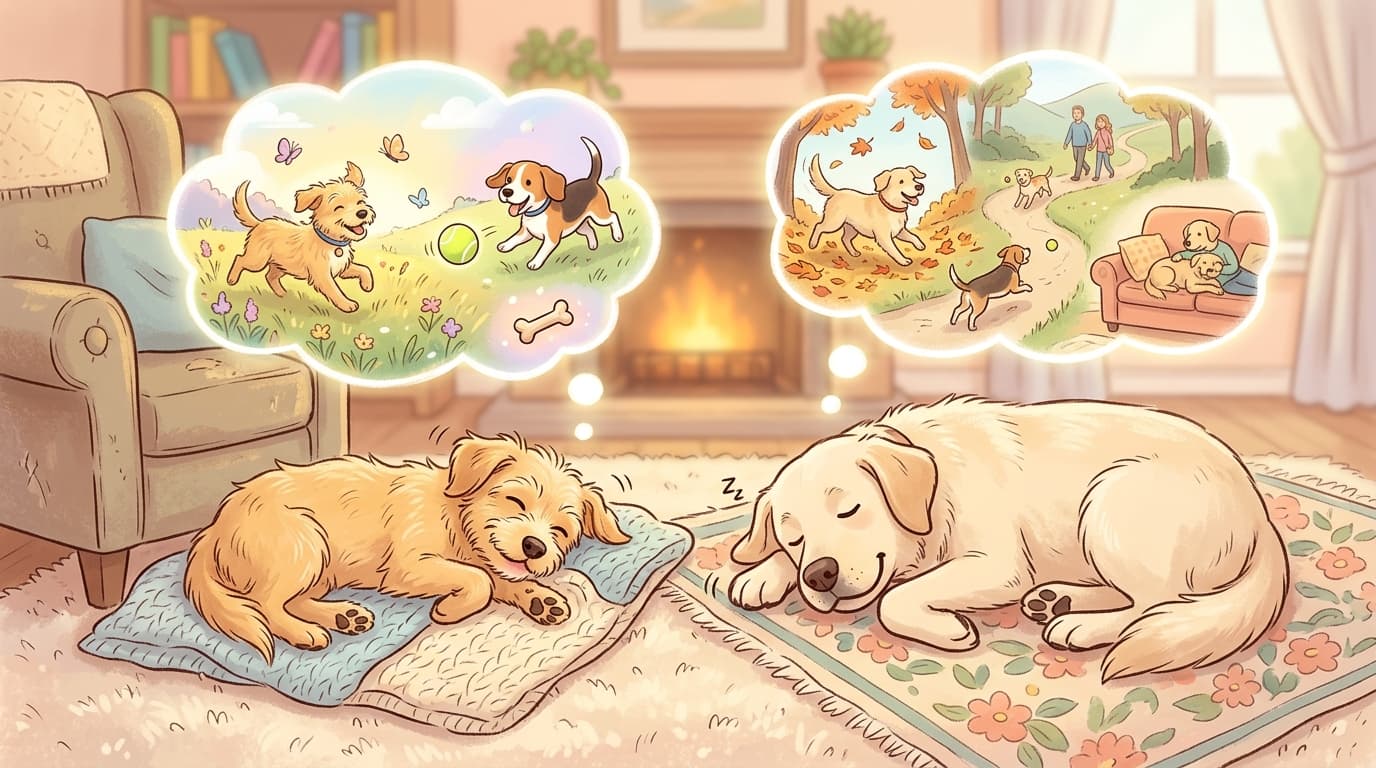
If you’ve ever watched your dog sleep and noticed little running legs, soft whimpers, or a twitchy face, you weren’t imagining things. Dogs really do dream, and the clues show up right there in their bodies.
Scientists have studied sleep in animals by looking at brain activity, and the patterns we see in dogs line up closely with what happens in people. That means your dog isn’t just “resting”—their brain is actively processing experiences, especially during a specific stage of sleep.
Dogs dream during REM sleep (just like humans)
Dogs dream during REM sleep, the same sleep phase where humans have the most vivid dreaming. REM stands for “rapid eye movement,” and it’s exactly what it sounds like: the eyes dart around underneath closed eyelids while the brain stays busy.
What’s fascinating is how quickly dogs get there. A person usually needs about 90–120 minutes to reach REM sleep. A dog can reach REM in roughly 15–20 minutes, which is why you might see dream-y movements shortly after your pup dozes off on the couch.
What do dogs dream about? Mostly their everyday life
The best evidence we have suggests dogs dream about what they’ve experienced recently. In other words, your dog’s dreams are likely a replay of their normal day—just with a dreamy, jumbled twist.
Common “dream topics” are thought to include:
- Running and playing
- Chewing or carrying a favorite toy
- Interacting with other dogs
- Chasing something exciting (like a squirrel or a ball)
Most pet owners don’t realize that this isn’t just cute—it’s part of how your dog’s brain organizes information. REM sleep helps store and strengthen memories, which supports learning and development.
Why dogs twitch, paddle, or make noises in their sleep
During REM sleep, the brain is active while the body is mostly relaxed, but little muscle contractions can slip through. That’s why you’ll sometimes see your dog act out pieces of a dream.